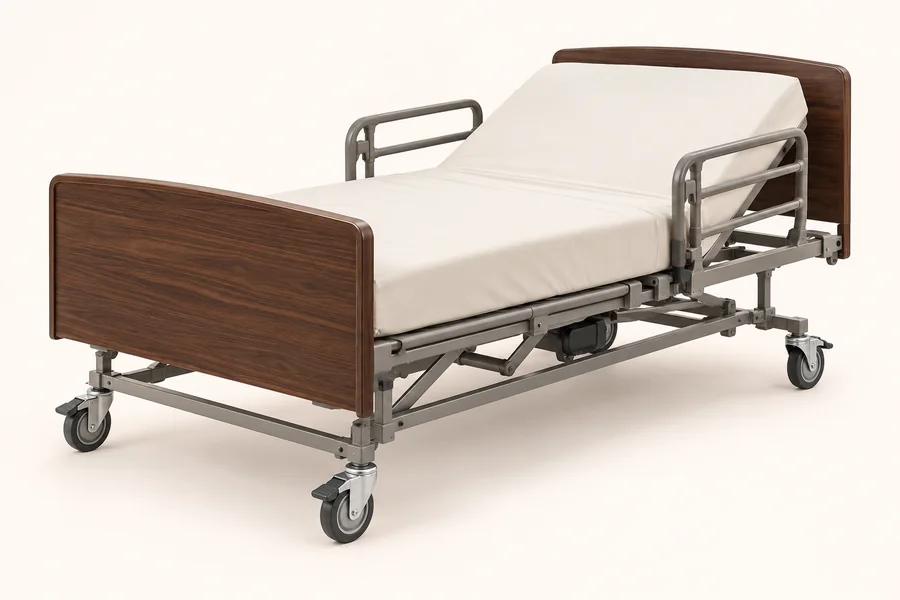
Renting can limit the initial commitment when the duration is uncertain. Buying may cost less over a longer period, but service, transport and eventual removal still matter. There is no universal break-even month: use your two written quotes.
- Compare the same bed type, mattress and required features.
- Include the minimum rental term and recurring mattress charges.
- Keep insurance, resale assumptions and refundable deposits separate.
Compare renting with buying.
Enter full quoted charges, including tax. Zero means there is no charge; replace it when a fee applies. Results stay on this page.
Make the two quotes comparable
Put the make, model, controls, dimensions, mattress and accessories at the top of both offers. A refurbished standard bed and a new premium bed are different purchases. A cost calculation cannot decide whether either is appropriate for the person using it.
Ask the rental supplier what happens if the bed breaks during use. Ask the seller who carries out warranty repairs, whether labor or transport is covered, and how quickly support can be arranged. Record the answers alongside the prices.
| Rental offer | Purchase offer |
|---|---|
| Rate and exact billing period | Bed and mattress purchase price |
| Minimum and recurring extras | Delivery and assembly |
| Delivery, setup and pickup | Warranty, labor and transport exclusions |
| Cancellation and extension terms | Return window and collection/removal costs |
| Refundable deposit separately | Any quoted finance charges separately |
What the calculator includes
Rental cost is the rate plus recurring extras, multiplied by billed periods, plus one-time charges. Billed periods cannot be shorter than the entered minimum. Purchase cost is the bed price plus the entered purchase-side charges.
The crossover is the first whole billed period when purchase costs no more than rental at those unchanged prices. It is not a recommendation. If both totals are equal, convenience and service may still differ. A refundable deposit is displayed separately rather than treated as a guaranteed loss.
Example using invented planning numbers: $200 per month plus $150 rental fees compared with a $1,000 purchase total crosses at five billed months. At four months rental is $950; at five it is $1,150. Replace every example number with your own quote.
If the length of use is uncertain
Run the comparison for a short, expected and longer duration. Confirm whether an extension keeps the original rate and whether unused time is refunded. A weekly option may have a higher rate but a shorter commitment; a monthly package can have different renewal rules.
Ask whether rental payments can count toward a purchase. Treat a credit as real only when the supplier confirms the exact amount and conditions in writing. Do not assume every payment reduces the buyout price.
Plan for the day you no longer need it
For a rental, agree on collection notice, fees and the billing cutoff. For a purchase, ask about return terms and eventual removal before ordering. Do not subtract an unconfirmed resale price from the purchase cost.
The Hospital Bed Project, for example, says it does not buy equipment back. Its donated-equipment pickup offer is not a buyback promise or proof that every supplier will remove a purchased bed.
If a plan is paying, compare your costs
First check the plan’s eligible equipment, suppliers and rental or purchase arrangement. Medicare handles different equipment categories in different ways; the private-pay crossover here does not decide coverage or ownership.
Keep an insurer’s individual estimate separate from the seller’s retail quote. If you enter your own expected payments, also account for the expenses your plan excludes.
Common questions
Does the calculator convert weeks into months?
No. Choose the quoted billing period and enter a whole number of those periods. Calendar-month, 28-day and weekly agreements are not interchangeable.
Does it include repairs, tax and removal?
Only if you include those amounts in the fee fields. The calculator does not know the supplier’s terms; obtain the missing charges before deciding.
Will I own a privately rented bed after a fixed number of payments?
Only if the contract provides for that. Do not apply an insurance rental rule to a private rental or assume rent-to-own credit without a written agreement.
Sources & approach
Based on linked supplier, manufacturer and public-agency information. This is source-based research, not hands-on testing or a clinical assessment. Confirm current equipment, terms and availability with the supplier; discuss equipment suitability with your care team.
- Medicare: durable medical equipment rental and purchase arrangements ↗ · medicare.gov
- Medicare: hospital-bed coverage ↗ · medicare.gov
- The Hospital Bed Project: buyback and rent-to-own information ↗ · thehospitalbedproject.org
Find rentals in your city.
See suppliers, bed options, published prices and delivery details.
Find local rentals →